Inherited Gold & Silver in Utah: The Complete 2026 Guide
Everything Utah families need to know about inheriting, evaluating, and deciding what to do with precious metals
If you've recently inherited gold jewelry, silver flatware, coins, or bullion from a loved one, you're facing decisions that go beyond dollars and cents. These items carry memories. They represent someone's life savings, their preparation for uncertain times, or simply pieces they wore and treasured.
You're also navigating these decisions during one of the most significant moments in precious metals history. Gold recently touched $5,600 per ounce before pulling back to around $4,700. Silver spiked above $120 before settling near $80. And as of January 1, 2026, the federal estate tax exemption was cut roughly in half—from $13.61 million to approximately $6.8 million per person.
Whether you're settling an estate, helping aging parents organize their assets, or simply wondering what Grandma's jewelry box is actually worth, this guide will help you make informed decisions—without pressure and without regret.
The Great Wealth Transfer Is Happening Now
Every day, roughly 11,000 Americans turn 65. Baby Boomers control approximately $85 trillion in wealth—about half of everything Americans own. Over the next two decades, an estimated $84 trillion will transfer from older generations to their heirs.
Much of this wealth isn't in stocks or real estate. It's in jewelry boxes, safe deposit boxes, home safes, and sock drawers. It's wedding rings, inherited coins, silver tea sets, and gold watches. For many families, these items represent the most tangible, holdable wealth they'll ever receive.

Here in Utah, we see this every week at The Gold Vault. Adult children come in carrying their mother's jewelry collection, unsure what any of it is worth. Widows bring in coins their husbands accumulated over decades. Families arrive together, trying to divide an inheritance fairly.
The emotional weight of these decisions is real. So is the financial significance.
Inherited Gold & Silver in Utah: What Makes It Different
Utah isn't just any state when it comes to precious metals. We have a unique relationship with gold and silver that affects everything from taxes to local currency. Here's what Utah families need to know:
Utah's Precious Metals Sales Tax Exemption
Utah exempts sales of gold, silver, platinum, and palladium bullion and coins from state sales tax when the transaction exceeds $1,000. This applies whether you're buying or selling. Compare this to states like California or New York, where you might pay 7-9% sales tax on precious metals purchases.
Goldbacks: Utah's Local Gold Currency
If you've inherited small, colorful bills featuring images of Lady Liberty or Utah-themed designs, you may have Goldbacks. Utah was the first state to issue this voluntary local currency in 2019, and it's become part of our precious metals culture.
Goldbacks contain actual 24-karat gold—from 1/1000 oz (the 1 Goldback) to 1/20 oz (the 50 Goldback)—laminated between thin protective layers. They can be spent at participating Utah merchants, held as fractional gold investments, or sold to dealers.
Utah Goldback Values (February 2026)
At current gold prices (~$4,700/oz), Goldback denominations are worth approximately:
- 1 Goldback (1/1000 oz):~$4.70 gold content
- 5 Goldback (1/200 oz):~$23.50 gold content
- 25 Goldback (1/40 oz):~$117.50 gold content
- 50 Goldback (1/20 oz):~$235 gold content
Note: Goldbacks typically trade at a premium above their gold content due to collectibility and usability.
Utah's Bullion Culture
Utah has one of the strongest precious metals communities in the country. The state's history with mining, its preparedness-minded population, and legislative support for sound money have created an environment where owning physical gold and silver is normalized.
The Utah Precious Metals Legal Tender Act (2011) recognized gold and silver coins issued by the U.S. Mint as legal tender within the state. While this hasn't changed day-to-day commerce much, it signaled Utah's commitment to monetary metals and helped foster local dealers, events, and education.
What this means for you: There are more reputable local options for evaluating and selling inherited precious metals than in most states. You don't have to ship your grandmother's jewelry to an online buyer sight-unseen.
Utah Estate Planning Resources
If you're inheriting precious metals as part of a larger estate, or helping parents plan their estates, Utah has specific considerations:
- No state estate tax: Utah doesn't impose its own estate tax beyond federal requirements
- No state inheritance tax: Heirs don't pay Utah taxes simply for receiving an inheritance
- Probate thresholds: Small estates (under $100,000) may qualify for simplified probate procedures
For complex estates involving significant precious metals holdings, consider consulting a Utah estate planning attorney. Many now have experience with physical gold and silver, Gold IRAs, and the specific documentation these assets require.
What You've Actually Inherited: A Quick Identification Guide
Before deciding whether to keep, sell, or redistribute inherited precious metals, you need to know what you have. Here's how to categorize common inherited items:
Gold Jewelry

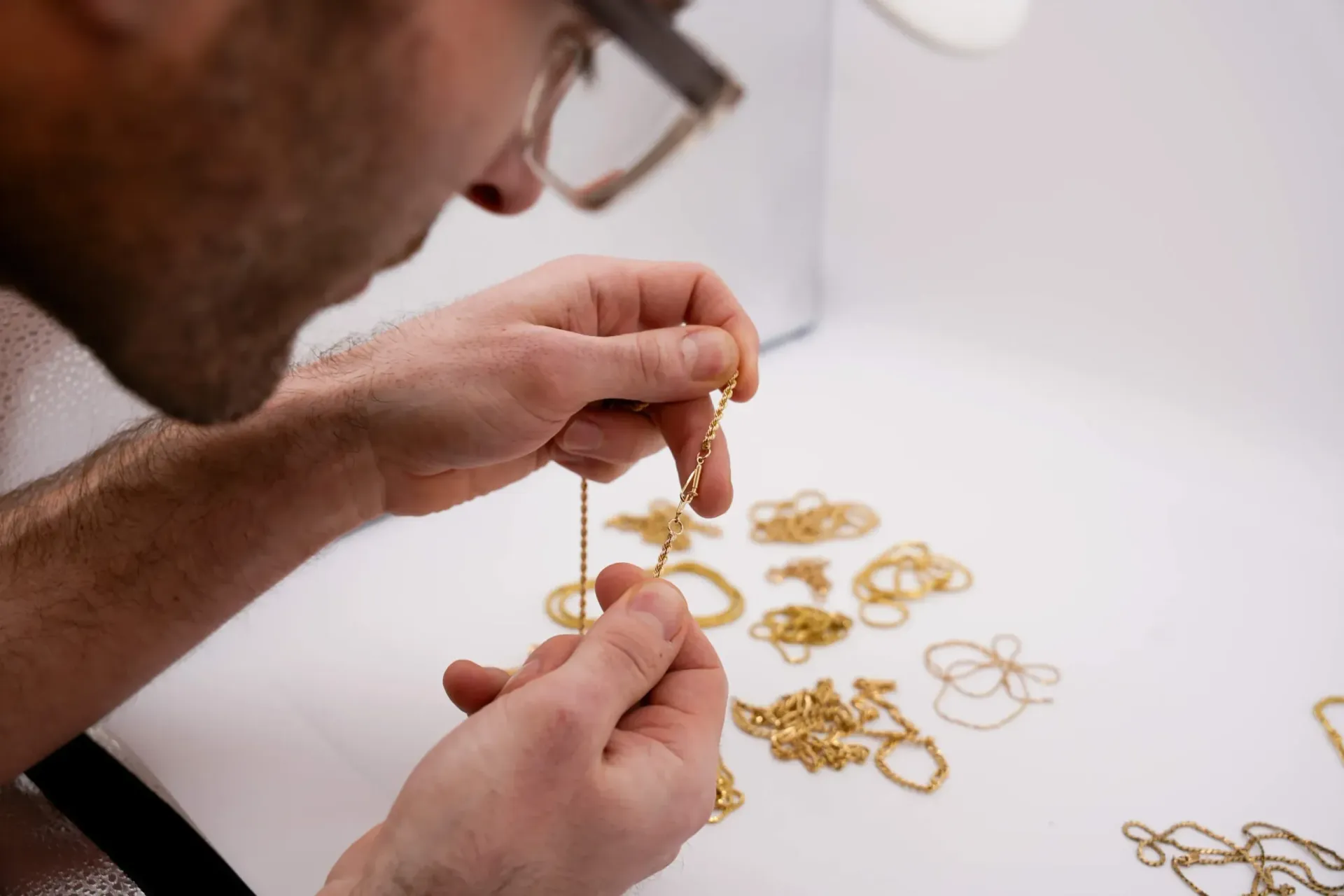
Look for karat stamps: 10K, 14K, 18K, or 24K. In the United States, 14K is most common for everyday jewelry, while 18K and 24K are typically found in higher-end or international pieces. The stamp is usually inside rings, on clasp mechanisms, or on small tags attached to chains. If you see "585," that's 14K gold (58.5% pure). "750" means 18K (75% pure).
Items marked "GF" (gold-filled), "GP" (gold-plated), or "HGE" (heavy gold electroplate) contain minimal gold and have limited melt value, though they may still have resale value as jewelry.
Silver Items
Sterling silver is marked "925" or "Sterling." This means 92.5% pure silver. Older American pieces might show maker's marks without purity stamps—these often require expert evaluation. Coin silver (90% pure) was common in early American flatware and may be marked "Coin" or "900."
Silver-plated items (marked "EP," "EPNS," or "Silver on Copper") have a thin silver coating over base metal and typically have no precious metal value, though antique pieces may have collector value.
Coins and Bullion
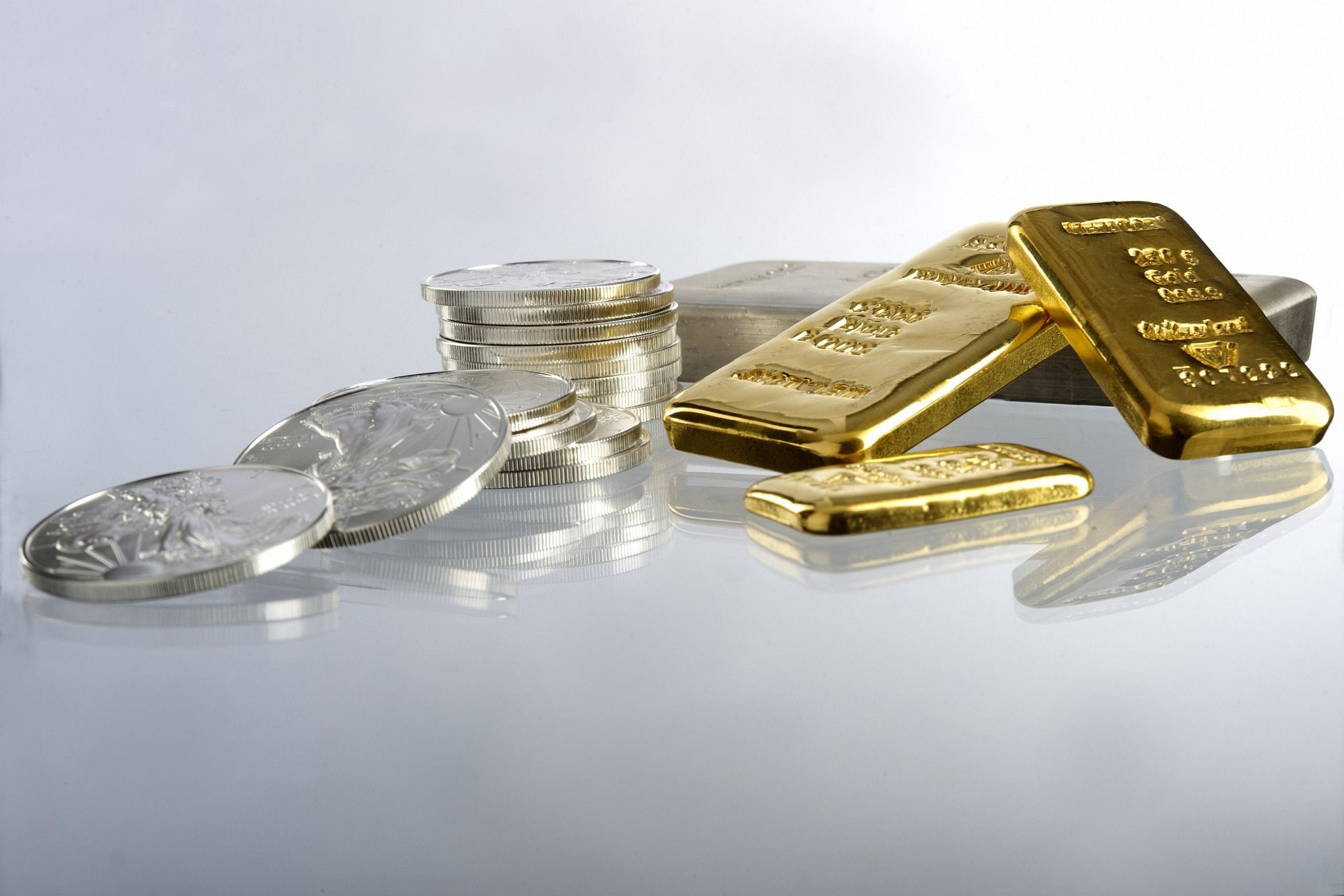
U.S. coins dated 1964 or earlier (dimes, quarters, half dollars) are 90% silver. Half dollars from 1965-1970 are 40% silver. These are often called "junk silver" or "constitutional silver"—though there's nothing junk about them at today's prices.

Gold coins require careful evaluation. American Gold Eagles, Canadian Maple Leafs, and South African Krugerrands are common bullion coins with values tied closely to gold spot price. Older U.S. gold coins (pre-1933) may have significant numismatic (collector) premiums above their gold content.
Dental Gold
Yes, dental gold has value. Crowns, bridges, and other dental work typically range from 10K to 22K gold. Many families inherit small containers of dental gold without realizing it's worth evaluating.
The 2026 Tax Landscape: What Utah Heirs Need to Know
The tax treatment of inherited precious metals changed significantly on January 1, 2026. Here's what matters:
The Step-Up in Basis
This is the most important tax concept for inherited precious metals. When you inherit physical gold or silver, your "cost basis" is "stepped up" to the fair market value on the date of death—not what your loved one originally paid.
This step-up makes inherited physical metals extremely tax-efficient compared to many other assets.
The Estate Tax Exemption Cliff
The federal estate tax exemption dropped from $13.61 million (2025) to approximately $6.8 million (2026). This means estates that were comfortably below the threshold last year may now face estate taxes.
For most Utah families, this won't directly impact inherited precious metals—the exemption still covers the vast majority of estates. However, if you're helping parents plan their estate, or if the estate includes substantial assets beyond precious metals, consulting with an estate planning attorney is wise.
Utah Advantage
Remember: Utah has no state estate tax and no inheritance tax. The only estate taxes Utah residents face are federal. Combined with Utah's sales tax exemption on precious metals, this makes Utah one of the most favorable states for inheriting and transacting in gold and silver.
Inherited IRAs vs. Physical Metals
If your loved one held precious metals in a Gold IRA rather than physically, the rules are different. Inherited IRAs (for non-spouse beneficiaries) must be fully distributed within 10 years, and distributions are taxed as ordinary income—not capital gains.
This is one reason many precious metals investors prefer holding physical gold and silver outside of IRAs: the step-up in basis for heirs can be significantly more tax-advantageous than the income tax treatment of inherited IRA distributions.
Physical Metals (Inherited)
- Step-up in basis to date-of-death value
- Only taxed on gains after inheritance
- Capital gains rates (max 28% for collectibles)
- No required distribution timeline
- Immediate access
Gold IRA (Inherited)
- No step-up in basis
- Entire distribution taxed as income
- Ordinary income rates (up to 37%)
- Must distribute within 10 years
- Custodian controls access
Note: Tax situations vary. Consult a tax professional for advice specific to your situation.
Should You Sell, Keep, or Buy More? A Decision Framework
There's no universally right answer. Here's how to think through your options:
Consider Selling If:
- You need liquidity for estate settlement costs, debts, or immediate financial needs. Precious metals are highly liquid—you can convert them to cash quickly, which isn't always true of real estate.
- Multiple heirs need to divide the inheritance fairly. Sometimes selling and splitting cash is simpler than trying to divide physical items equitably.
- The items have no sentimental value and you'd rather redeploy the capital elsewhere. There's nothing wrong with this—it's a practical financial decision.
- You've inherited broken, damaged, or mismatched jewelry with limited wearability or resale potential. These items are often worth more as melt value than as jewelry.
Consider Keeping If:
- The items have strong sentimental value. A wedding ring, a grandfather's watch, or a family heirloom carries meaning that transcends market value.
- You want to maintain or increase your precious metals allocation. With gold near $4,700 and silver around $80, holding inherited metals means you've essentially acquired them at your stepped-up basis with no transaction costs.
- You're concerned about inflation, currency debasement, or economic uncertainty. Many people are adding to their precious metals holdings in 2026, not reducing them.
- You have secure storage and don't need the immediate liquidity.
Consider Buying More If:
- Your inheritance sparked an interest in precious metals as part of your financial strategy. Many people become precious metals investors after inheriting their first coins or bullion.
- You want to "round out" a collection. If you inherited a partial set of silver flatware or a few gold coins, completing the set can increase both utility and value.
- The recent market correction presents an opportunity. Gold dropping from $5,600 to $4,700 and silver from $120 to $80 has created what some investors view as a buying window—though no one can predict short-term price movements.
Where to Sell Inherited Precious Metals in Utah
If you decide to sell some or all of your inherited precious metals, you have several options. Each has tradeoffs:
Pawn Shops
Pros: Quick, convenient, no appointment needed.
Cons: Typically offer 50-70% of actual value. Pawn shops need high margins because they're lending money and holding inventory. For inherited precious metals, this usually isn't your best option.
Online Buyers
Pros: Competitive offers from a national market.
Cons: You must ship insured, wait for evaluation, and accept their offer sight unseen. Risk of loss or damage in transit. No personal service or ability to ask questions face-to-face.
Jewelry Stores
Pros: May offer fair prices for intact, wearable jewelry they can resell.
Cons: Often not interested in bullion, coins, or scrap. Primarily focused on their retail business, not buying.
Dedicated Precious Metals Dealers
Pros: Specialized expertise, competitive pricing tied to spot markets, ability to evaluate numismatic premiums, and typically the highest payouts for bullion and coins.
Cons: Varies by dealer—look for established businesses with transparent pricing.
About The Gold Vault
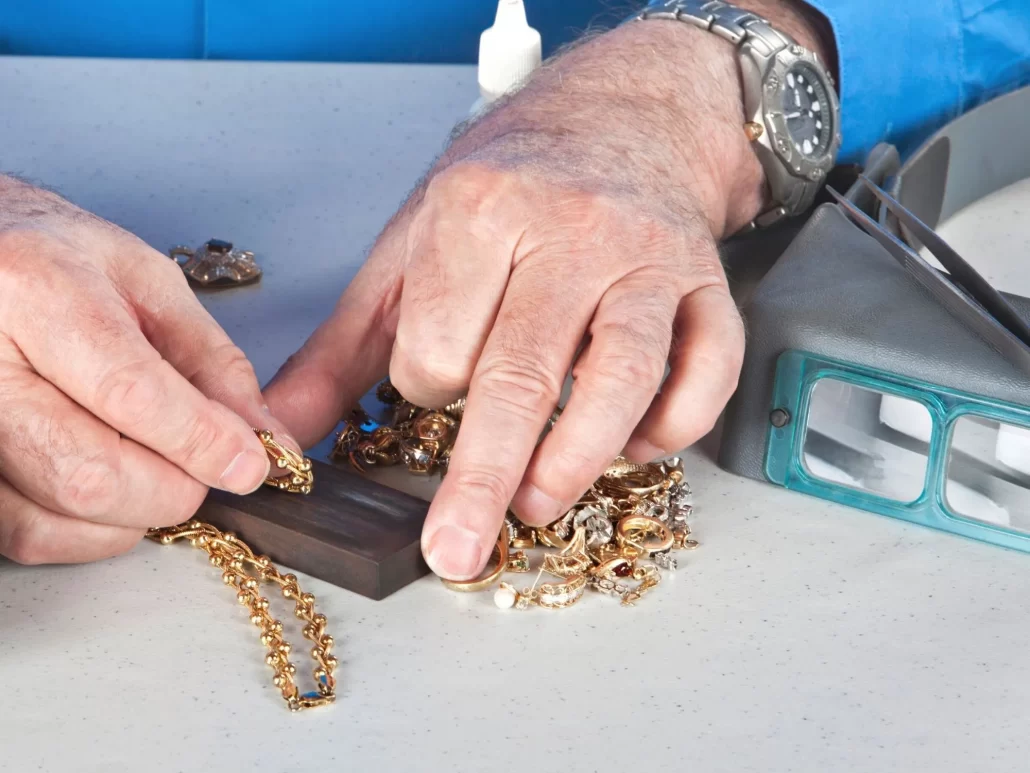
At The Gold Vault in Salt Lake City, we work directly with refineries, which allows us to pay prices that pawn shops and general jewelry stores simply can't match. We'll show you exactly how we test and weigh your items, explain current spot prices, and give you a no-obligation quote. If you decide not to sell, there's no pressure—we're happy to educate even if you walk out with everything you brought in.
Protecting Your Inheritance: Storage and Documentation
Whether you're keeping inherited precious metals for yourself or planning to eventually pass them to the next generation, proper storage and documentation matter:
Home Storage
A quality home safe (fire-rated, bolted to the floor or wall) provides reasonable security for modest collections. Avoid obvious hiding spots. Consider that home insurance typically has low limits for precious metals—you may need a separate rider or floater policy.
Bank Safe Deposit Boxes
Offers security but has limitations: limited access hours, no FDIC insurance for contents, and potential access complications if you become incapacitated. Make sure your estate plan addresses safe deposit box access.
Documentation for Future Generations
Create an inventory with photographs, descriptions, approximate values, and storage locations. Share this information with your executor or a trusted family member. Too many precious metals collections are lost simply because heirs didn't know they existed or couldn't find them.
Consider writing a letter explaining why you acquired or kept these items. The story behind an inheritance often matters as much as its value.
Common Mistakes to Avoid
Selling in grief-driven haste. Precious metals don't spoil. Unless you have urgent financial needs, take time to research values and consider your options. The spot price today will be similar next month.
Accepting the first offer. Get multiple quotes. Legitimate dealers won't pressure you to sell immediately. If someone is rushing you, walk away.
Cleaning or polishing coins. This can destroy collector value. Numismatic coins should be evaluated by an expert before any cleaning.
Assuming gold-colored means gold. Always verify with stamps or professional testing. Many inherited items turn out to be gold-plated or costume jewelry.
Throwing away "junk." That tarnished old chain, those random coins in a drawer, even dental work—all may have significant value. When in doubt, have it evaluated.
Forgetting the emotional component. If selling a piece would cause lasting regret, keep it. Money can be earned; memories and connections to loved ones cannot be replaced.
Frequently Asked Questions
No. Utah exempts sales of gold, silver, platinum, and palladium bullion and coins from sales tax when the transaction exceeds $1,000. This makes Utah one of the most favorable states for precious metals transactions. The exemption applies whether you're buying or selling.
When you inherit physical precious metals, your cost basis "steps up" to the fair market value on the date of the original owner's death. This means if your father bought gold at $400/oz and it was worth $4,700/oz when he passed, your basis is $4,700. You only pay capital gains tax on appreciation above that stepped-up value if you sell.
Look for karat stamps inside rings, on clasps, or on tags: 10K, 14K, 18K, or 24K indicate real gold. "585" means 14K (58.5% pure), "750" means 18K. Items marked "GF" (gold-filled), "GP" (gold-plated), or "HGE" (heavy gold electroplate) contain minimal gold. For unmarked pieces, a reputable dealer can perform acid testing or XRF analysis to determine gold content.
Yes, significantly more. U.S. dimes, quarters, and half dollars dated 1964 or earlier contain 90% silver. At current silver prices around $80/oz, a pre-1964 quarter contains roughly $14-15 worth of silver. Half dollars from 1965-1970 contain 40% silver and are also worth well above face value.
Goldbacks are a local voluntary currency featuring real 24-karat gold in thin, spendable notes. Utah was the first state to issue Goldbacks in 2019, and they remain legal to own, trade, and spend here. If you've inherited Goldbacks, they contain actual gold (1/1000 to 1/20 of an oz per note) and can be spent at participating Utah businesses, held as an investment, or sold to dealers.
Dental gold typically ranges from 10K to 22K purity, with most pieces falling in the 16K range. A single crown might contain 1/10 oz of gold or more. At current gold prices, dental gold can be worth $50-300+ per piece depending on size and purity. Many families inherit containers of dental gold without realizing its value.
No—never clean coins. Cleaning can destroy collector (numismatic) value and turn a valuable coin into one worth only its metal content. Natural toning and patina are often desirable to collectors. Have coins evaluated by an expert before any cleaning or handling beyond what's necessary.
The federal estate tax exemption dropped from $13.61 million (2025) to approximately $6.8 million per person in 2026. Estates exceeding this threshold may owe estate taxes. For most Utah families, this won't directly impact inherited precious metals, but larger estates should consult with an estate planning attorney.
For most heirs, physical metal is more tax-advantageous. Inherited physical gold receives a step-up in basis, potentially eliminating capital gains entirely. Inherited Gold IRAs (for non-spouse beneficiaries) must be fully distributed within 10 years, with distributions taxed as ordinary income—often at higher rates than capital gains.
The Gold Vault in Salt Lake City offers free, no-obligation evaluations of inherited gold, silver, coins, and jewelry. We work directly with refineries, use professional XRF and acid testing, and explain current spot prices transparently. Walk-ins are welcome, and there's never pressure to sell.
Moving Forward
Inheriting precious metals is both a financial event and an emotional one. The items you've received represent someone's values, their preparation, their taste. Handling them thoughtfully honors their memory.
Take your time. Get educated. Ask questions. Whether you ultimately sell, keep, or add to your inheritance, make the decision from a place of knowledge rather than uncertainty.
Get a Free, No-Obligation Evaluation
If you're in the Salt Lake City area and would like a free evaluation of inherited gold, silver, coins, or jewelry, stop by The Gold Vault. We'll explain exactly what you have, what it's worth, and what your options are—with zero pressure to sell.
Visit The Gold VaultRiverton, Utah
Walk-ins welcome • Free evaluations • Fair prices
Call (801) 890-1597
Ready to work with The Gold Vault?
Let's connect! We’re here to help.
Send us a message and we’ll be in touch.
Or give us a call today at 801-890-1597
Agency Contact Form
Precious Metals Insights from The Gold Vault
Utah Gold and Silver News